We also share information about your use of our site with our social media, advertising and analytics partners who may combine it with other information that you’ve provided to them or that they’ve collected from your use of their services.


What Are High-Capacity Scaffolding Wheels?
In construction and various industrial sites, scaffolding wheels are more than just components for movement and positioning; they are critical safety elements that affect the efficiency and security of the entire project. As the scale of engineering projects grows, the demand for high-capacity, high-safety heavy duty casters continues to rise. Among these, "load capacity" has become the core metric for evaluating performance.
What are High-Capacity Scaffolding Wheels?
High-capacity scaffolding wheels are premium heavy-duty casters built for mobile scaffolding systems. Adhering to international safety standards, they feature superior static and dynamic load integration. Unlike standard options, Haion Caster's reinforced series is engineered for extreme environments like shipyards, ensuring rock-solid support and smooth mobility even under loads exceeding 1,000kg.
Three Key Factors Influencing Scaffolding Wheel Load Capacity
At the beginning of the design phase, Haion Caster performs precise calculations on the
following three aspects to ensure stable operation even under extreme loads:
1. Plate Thickness
The top plate acts as the bridge between the scaffolding structure and the wheel.
Haion Caster utilizes thickened steel plates to effectively prevent deformation caused
by uneven stress, which directly determines the overall structural integrity of the
heavy duty casters.
The primary value of increased wheel thickness lies in enhancing physical structural support.
It ensures that the wheel body maintains its perfectly round shape and continues to
provide smooth mobility even under extreme, high-load conditions.
3. Overall Height
Height is closely related to torque. Through optimized height design and center-of-gravity
configuration, Haion Caster products maintain excellent support under weight,
ensuring stability during high-load movement.
High-Capacity Scaffolding Wheels: European Standard vs. American Standard
Depending on regional construction habits and structural requirements,
heavy duty scaffolding wheels are primarily categorized into two major types:
1. European Standard (EU) Heavy Duty Scaffolding Wheels
The European standard is characterized by its diverse mounting designs to fit different scaffolding tubes.
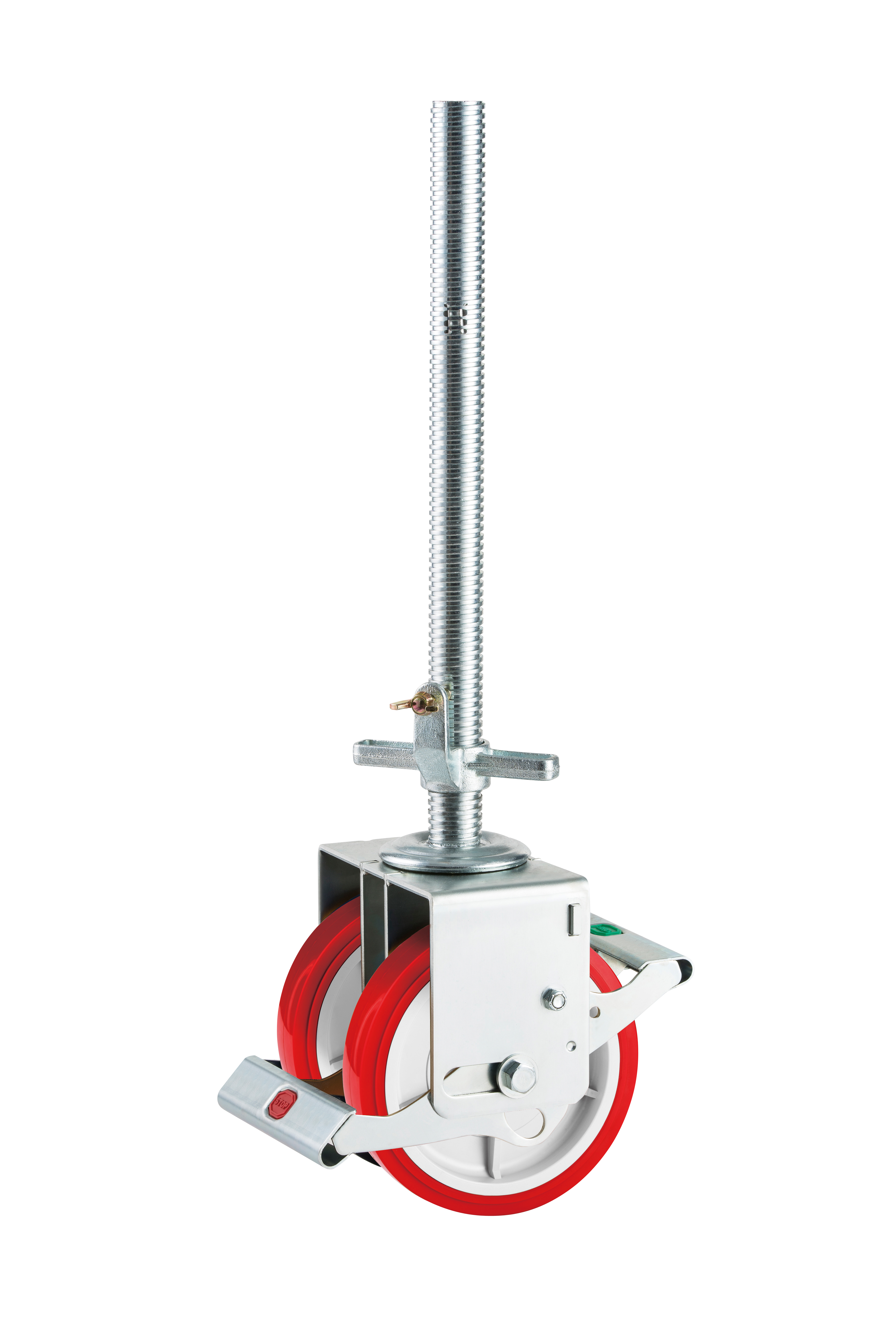
◆Spindle and Nut: H24 Double Wheel:
A highly popular specification in the Japanese market.
Haion Caster employs a double wheel design to drastically improve traction and support.
An 8-inch twin-wheel can carry up to 1500KG, making it the top choice for
heavy-duty construction.
◆H12 Single Wheel:
Commonly used in European engineering.
When configured with premium nylon material, specific plate thickness, and height,
a Haion Caster 8-inch single wheel can provide an impressive load capacity of
1000KG to 1300KG.
.jpg)
2. American Standard (US) Heavy Duty Scaffolding Wheels
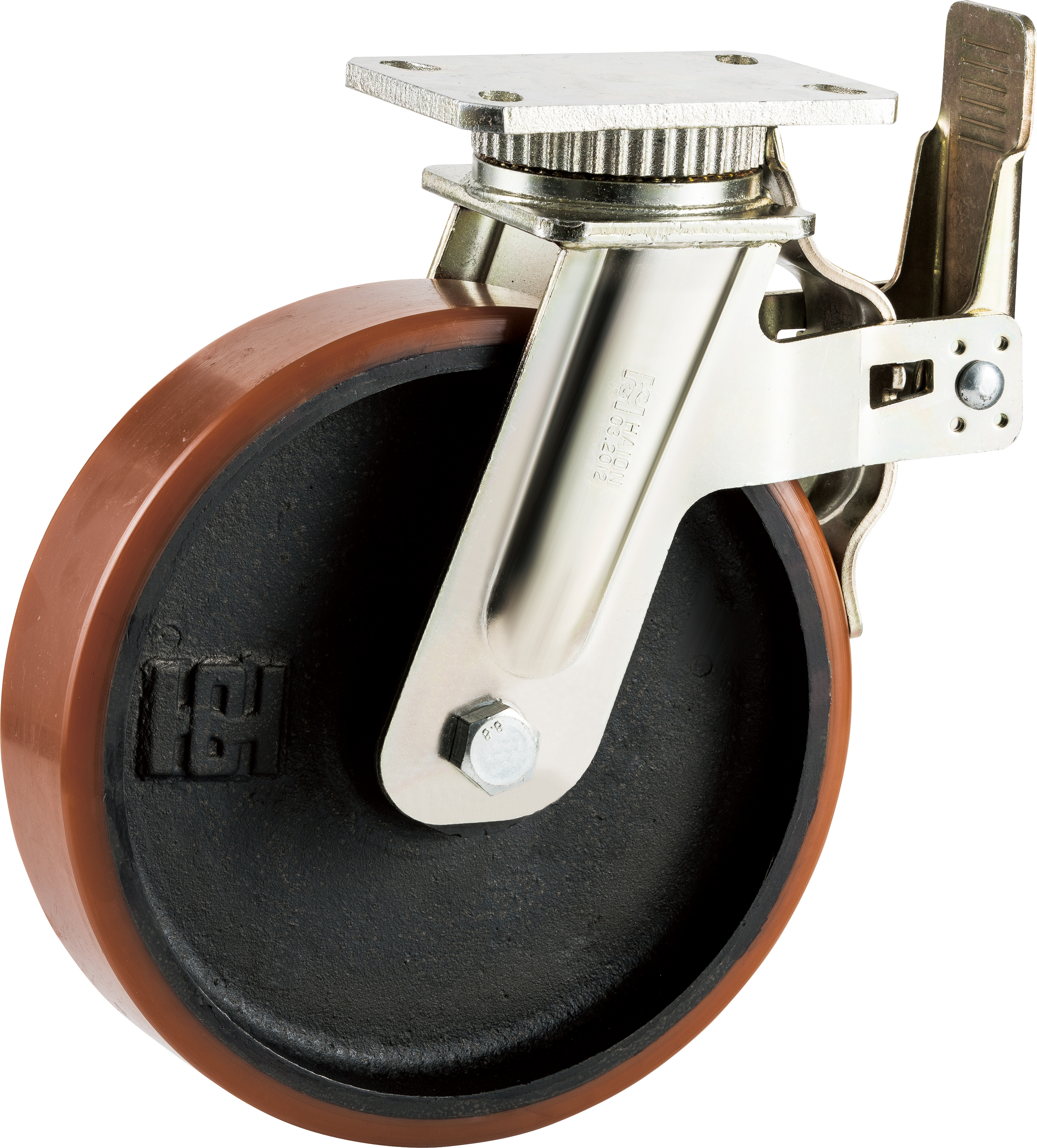
◆H10 Plate Wheel:
Core Configuration: Haion Caster uses cast iron wheels paired with an
"all-steel thick plate" design. The extreme hardness of the cast iron, combined with
the heavy-duty plate, provides ultimate compression resistance and durability,
ideal for the most rugged and demanding work environments.
The 12-inch cast iron scaffolding wheel provides a high load capacity of 1,360kg.
Application Environments for High-Capacity Scaffolding Wheels
Choosing the right heavy duty casters depends on the specific demands of the site:
◆ Large-Scale Construction Sites
◆ Shipbuilding and Heavy Industry
◆High-Safety Long-Term Operations
Choosing Haion Caster: Precision in Load Capacity for Maximum Safety Standards
Selecting the correct scaffolding wheels is the first step toward ensuring site safety and operational efficiency.
Whether you are looking for versatile European standard scaffolding wheels or the rugged durability of American cast iron plate models,
understanding the impact of plate thickness, wheel thickness, and material is essential to choosing cost-effective and long-lasting equipment.
HAION CASTER INDUSTRIAL CO., LTD.
Head office : 9F-5, No.27, Lane 61, Sec.1 Kwangfu Rd., Sanchong Dist., New Taipei City, 241 Taiwan
Tel : +886-2-2999-8831
Fax : +886-2-2999-9131
Email : [email protected]
Get our newsletter
Subscribe